vsHeroku
A dyno with half a gigabyte is $25 a month, and its database another $50. Here they share one machine.
No opinions here: dyno sizes, add-on prices, and what each one holds.
That is what a Standard-1X dyno holds, and it works out at fifty dollars a gigabyte of memory per month. On a server a gigabyte costs about one euro.
A Postgres with four gigabytes of memory is $50 a month, and 50 MB of Key-Value store is $15. Here they are two apps on the machine you already pay for.
Buildpacks ran your repository without a container file. Deplo reads the framework from your package.json on every deploy and builds it with Railpack or Nixpacks, and a Dockerfile you already have is used as it is once you pick the Dockerfile method.
That is what a Standard-1X dyno holds, and it works out at fifty dollars a gigabyte of memory per month. On a server a gigabyte costs about one euro.
A Postgres with four gigabytes of memory is $50 a month, and 50 MB of Key-Value store is $15. Here they are two apps on the machine you already pay for.
Buildpacks ran your repository without a container file. Deplo reads the framework from your package.json on every deploy and builds it with Railpack or Nixpacks, and a Dockerfile you already have is used as it is once you pick the Dockerfile method.

Three answers, two numbers. Theirs comes from their published price list; ours is a plan you can buy today.
$150/ month
3 GB of memory
$16.71/ month
CubePath gp.starter
8 GB of memory
Heroku numbers are their published list, read on 8 October 2026. One always-on service is a gigabyte of memory on both sides. On Heroku the dyno that holds one is the Standard-2X, $50 a month: the $25 Standard-1X and the $7 Basic carry 512 MB. A database is an add-on on top, from $5 to $50 and beyond. www.heroku.com
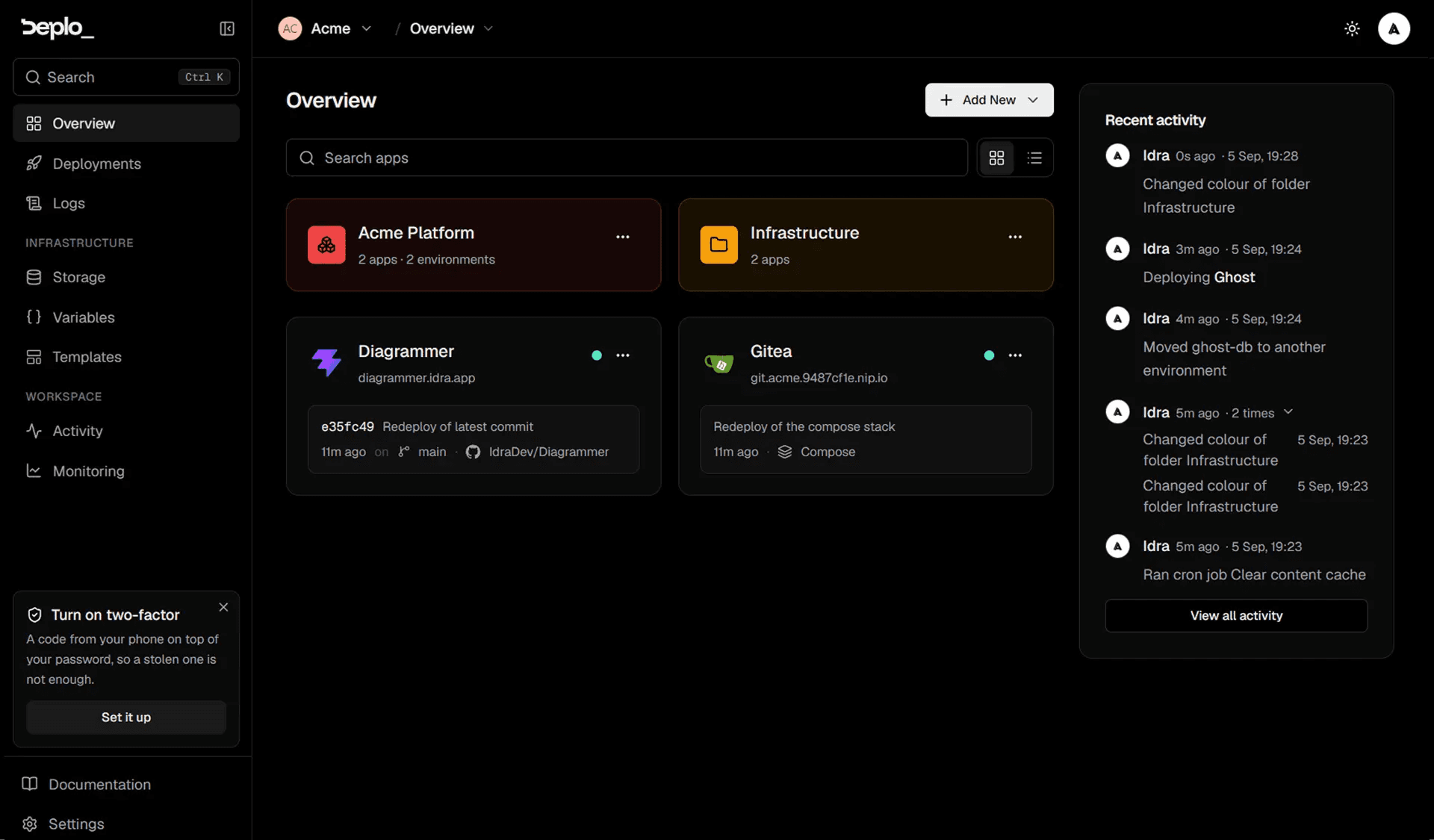
Click around a real Deplo on a real server for a few minutes. No email, no password, nothing to migrate yet.
Try the demoDeploys, backups, logs, metrics and TLS, already on. Nothing to buy on top, nothing to hunt down.
Ask, and it's done. Connect Claude, Cursor or any assistant that supports MCP, and it can deploy, read the logs and roll back when you ask in plain words. It works with a key you create and can revoke at any time, and it can never do more than you can. Nothing connects until you create a key, and one switch turns it off for the whole team.

Your whole release process becomes a push. Connect GitHub, GitLab, Bitbucket or Gitea once. Every push to your main branch goes live, every pull request on GitHub gets its own preview link that disappears when it closes, and a bad release goes back to the version that worked.

Your team works on the same apps without stepping on each other. Give each person exactly the access they need, like "can deploy, can't delete", and hand a freelancer or a client one project and nothing else. The activity timeline shows who did what and when, right in the dashboard.

Your app online without touching a setting. Connect the repo and you get a live link, and HTTPS the moment you add your domain. Deplo recognises your framework and builds it for you, and Postgres or Redis sits next to your app in two clicks. Same stack you ran on the cloud. Only the bill changed.

What a real stack costs there, and what comes across.
A web dyno, a worker and a Postgres with four gigabytes: $25 plus $25 plus $50, so $100 a month for one gigabyte of application memory. A server with eight gigabytes, from one of our partners, is single digits in euros, and Deplo on top is free.
No. Deplo detects the framework from your package.json on every deploy and builds with Railpack or Nixpacks, the same job buildpacks did. If you already wrote a Dockerfile, pick the Dockerfile method and it is used as it is.
Postgres, Redis, MySQL and Mongo become databases Deplo manages on your server, with scheduled encrypted backups. Third-party services you reached over the internet stay where they are: the key moves into an environment variable.
The add-on marketplace, and somebody else's on-call. The server becomes yours, which is the trade: the bill stops growing and the uptime becomes your problem.
Answer three questions and pick a host, or install Deplo on a server you already have. It's free, and leaving is as easy as arriving. What you do with the money you save is your business.
 Heroku